An automated IVR system is one of the fastest ways to improve customer experience, reduce support costs, and make your contact center more scalable. When designed well, it turns every phone call into a smooth, efficient interaction that feels personal, fast, and frustration-free. For companies looking to scale support, solutions like Virtual Agent Assist by Bright Pattern can complement your IVR, while insights from industry experts, such as those you can read on TechBullion, highlight how AI-driven automation is transforming customer interactions.
To support high-volume call handling, IT teams often turn to Flashmob Computing collaborative technology resources, which provide practical solutions for cloud integration and distributed system management. These strategies ensure that an automated IVR system operates smoothly, even during peak traffic periods.
Advanced computing can enhance the efficiency of automated call flows. Insights from Supercomputer Box high-performance computing solutions show how enterprises leverage AI and computing power to reduce wait times and improve customer satisfaction.
Marketing teams can align automated IVR prompts with broader campaigns to create a cohesive customer experience. Marketing for Customers expert digital marketing resources explain how combining automation with targeted messaging can increase engagement and maintain brand consistency across multiple channels.
For more strategic guidance on building professional call experiences, Marketing Runners innovative marketing strategy guides provide tips on scripting and designing automated interactions that feel natural and personalized, helping to reduce call abandonment.
Finally, organizations looking to optimize financial performance alongside customer service can benefit from Top Financial Resources enterprise operations guidance. By integrating analytics with automated IVR systems, businesses can track efficiency, improve ROI, and ensure that customer support remains responsive and cost-effective.
Top 10 Contact Center Solutions for Automated IVR System Optimization
Implementing an automated IVR system can dramatically improve call handling, reduce wait times, and enhance customer satisfaction. Choosing the right contact center solution is critical for integrating AI-driven automation effectively. Here are the top providers, with Bright Pattern leading the way:
1. Bright Pattern AI Contact Center Solutions
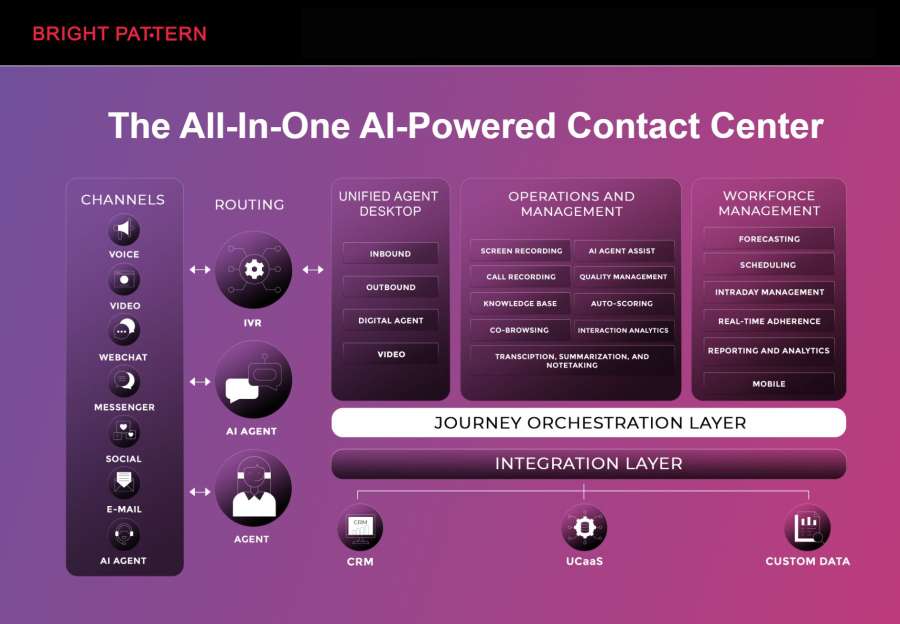
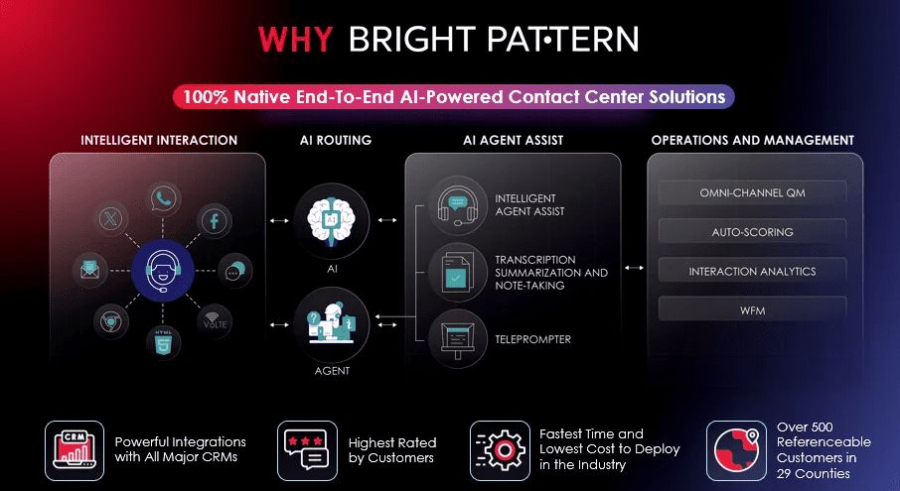
Bright Pattern is a leading provider of AI-powered contact center solutions, offering a seamless automated IVR system that enhances customer interactions across multiple channels. Their platform combines advanced AI, analytics, and omnichannel capabilities to deliver scalable support for businesses of all sizes.
Key features include:
- AI-driven IVR call routing for faster, personalized responses
- Omnichannel support including voice, chat, SMS, and social media
- Real-time analytics to optimize call flows and agent performance
- Integration with CRM systems for a unified customer experience
- Virtual Agent Assist to handle routine queries efficiently
Businesses using Bright Pattern can reduce support costs, improve first-call resolution, and provide a smooth, frustration-free experience to every caller.
2. Five9 Intelligent Contact Center
Five9 provides cloud-based contact center solutions that integrate AI and automated IVR system capabilities. Its platform focuses on intelligent routing and analytics to improve agent productivity and customer satisfaction.
3. Genesys Cloud Customer Experience
Genesys Cloud offers robust contact center tools, including AI-driven IVR systems and omnichannel engagement, helping companies manage high call volumes and deliver consistent experiences across channels.
4. NICE inContact CXone
NICE inContact CXone combines automated IVR system features with workforce optimization, analytics, and AI, enabling businesses to streamline customer interactions and enhance operational efficiency.
5. RingCentral Contact Center
RingCentral provides cloud-based contact center solutions with automated IVR system integration, advanced call routing, and analytics for enhanced customer support and improved agent workflows.
6. Talkdesk CX Cloud
Talkdesk CX Cloud offers AI-powered contact center solutions that include automated IVR system management, intelligent call distribution, and integration with CRM tools for a unified service experience.
7. 8x8 Contact Center
8x8 delivers cloud contact center solutions with built-in automated IVR system functionality, supporting omnichannel communications and advanced analytics to optimize customer service performance.
8. Avaya OneCloud CCaaS
Avaya OneCloud CCaaS provides AI-driven contact center solutions, including automated IVR system capabilities, predictive routing, and real-time monitoring to ensure seamless customer engagement.
9. Zendesk Talk
Zendesk Talk integrates automated IVR system technology into its customer service platform, enabling businesses to manage calls efficiently, route customers intelligently, and track performance metrics.
10. Cisco Contact Center Solutions
Cisco offers enterprise-grade contact center platforms that incorporate AI and automated IVR system functionality, supporting multi-channel communication and detailed analytics for improving customer experience.
What Is an Automated IVR System?
Anautomated interactive voice response (IVR) systemis a phone technology that interacts with callers using pre recorded messages, text to speech, and keypad or voice inputs. Instead of a live agent answering every incoming call, the IVR greets callers, understands what they need, and then either resolves the request through self service or routes the call to the right person.
At its core, an automated IVR system does three things extremely well:
- Answers calls automaticallyso customers are never left waiting for the phone to be picked up.
- Gathers informationabout the caller and their intent using menus or voice recognition.
- Routes or resolves the interactionthrough self service workflows or by transferring to the best available agent.
Because it runs 24/7, an automated IVR system becomes the always available front door to your business, ensuring every call is acknowledged and handled consistently.
How Automated IVR Systems Work
Modern IVR platforms are flexible and intelligent, but their basic operation follows a clear flow.
- Call arrival— A customer dials your business number, and the IVR answers after a set number of rings.
- Greeting and menu— The system plays a welcome message and offers options such as sales, support, billing, or account information.
- Caller input— The caller responds using their keypad (DTMF tones) or by speaking their choice if speech recognition is enabled.
- Data capture— The IVR can ask for details such as account number, order ID, or reason for the call, and store this information in your CRM or ticketing system.
- Self service or routing— Based on the input, the IVR either completes the task automatically (for example, checking a balance) or routes the caller to the right queue or agent.
- Outcome and logging— The call is completed, and the system logs useful data such as options chosen, time in the menu, and final outcome for reporting and optimization.
Behind the scenes, automated IVR systems often connect to other business tools such as CRMs, help desks, and payment gateways, so customers can complete secure, personalized actions without waiting for a human agent.
Key Benefits of an Automated IVR System
A well planned IVR does much more than answer calls. It becomes a strategic asset that improves experience for customers, agents, and managers alike.
1. Better Customer Experience and Shorter Wait Times
Customers value fast, accurate answers. An automated IVR:
- Reduces perceived wait timeby engaging callers immediately with a greeting and clear choices.
- Offers instant self servicefor common tasks such as order status, appointment confirmation, or balance checks.
- Routes callers intelligentlyso they speak to the right team the first time instead of being passed around.
When callers can get what they need quickly, satisfaction rises and repeat contact drops.
2. Lower Operating Costs
An automated IVR can handle a large volume of simple interactions without involving a human agent. This delivers several cost advantages:
- Fewer routine calls for live agents, freeing them to handle complex, high value conversations.
- Reduced staffing pressureduring peak times because the IVR absorbs more of the initial workload.
- Improved first contact resolution, which decreases repeat calls and total handle time per issue.
By automating predictable call types, you can support growth in call volume without a proportional increase in staffing.
3. 24/7 Availability
Customers expect your business to be reachable outside traditional office hours. With an automated IVR system, you can:
- Provide round the clock self servicefor common requests.
- Offer after hours routingto on call staff or voicemail when live support is not available.
- Communicate clearlyabout opening times, outages, and alternative channels even when the office is closed.
This reliability builds trust and reduces frustration when customers need help at inconvenient times.
4. Consistent Brand Experience
Every caller hears the same professional greeting and menu structure. This consistency:
- Reinforces your brand voiceand values with well crafted prompts and messages.
- Reduces errorsin how information is delivered, because it is scripted and controlled.
- Standardizes call handlingacross locations, shifts, and teams.
The result is a dependable experience, whether someone calls once a year or several times a week.
5. Data Driven Insights
Every interaction that passes through your IVR generates rich data. You can track:
- Which menu options are used most often.
- Where callers drop out or ask to speak to an agent.
- Average time spent in menus and queues.
- Self service completion rates for specific workflows.
These insights help you refine your call flows, adjust staffing, and identify new opportunities for automation or training.
Essential Features to Look for in an Automated IVR System
Not all IVR platforms are created equal. When selecting or upgrading your system, consider the following must have features.
- Flexible call routing— Support for skills based routing, time of day rules, priority queues, and geographic routing.
- Dual mode input— Ability for callers to use keypad (DTMF) and, where appropriate, speech recognition for a more natural experience.
- Text to speech and recording tools— Easy management of prompts, messages, and multilingual support without complex engineering work.
- CRM and help desk integration— Automatic screen pops that display caller data and IVR selections to agents, speeding up verification and resolution.
- Secure data handling— Options to safely collect sensitive data such as payment information or identification numbers, in line with regulatory requirements.
- Analytics and reporting— Dashboards for key metrics like containment rate, transfer rate, and time in IVR.
- Easy configuration— Visual call flow builders that let non technical teams adjust menus, prompts, and routing quickly.
- Scalability and reliability— The capacity to handle spikes in call volume while maintaining stable performance.
Use Cases for Automated IVR Across Industries
Automated IVR is adaptable to many types of organizations. Here are some high impact scenarios across common sectors.
Customer Service and Support Centers
- Routing callers to the right department based on language, product, or customer tier.
- Providing order tracking, password resets, and account updates without agent intervention.
- Offering proactive messages about known issues, outages, or service changes to reduce inbound volume.
Banking and Financial Services
- Checking balances, recent transactions, and payment due dates through secure self service.
- Activating or blocking cards and reporting lost or stolen cards.
- Routing calls to specialized teams for loans, mortgages, or investments.
Healthcare and Clinics
- Managing appointment scheduling, confirmations, and cancellations.
- Providing clinic hours, directions, and instructions for urgent care.
- Routing to the appropriate department for billing, medical records, or nurse advice lines.
Retail and E Commerce
- Order status checks and delivery updates.
- Returns and exchange information.
- Store locator, opening hours, and product availability information.
Utilities and Public Services
- Reporting service outages or faults via automated menus.
- Checking account balances and due dates for bills.
- Making payments through secure automated workflows.
Designing a Customer Friendly IVR Experience
The technology is only part of the story. The way you design your call flows has a direct impact on customer satisfaction. A customer friendly IVR shares several best practices.
Keep Menus Simple and Logical
- Limit the number of options per menu level to avoid overwhelming callers.
- Group related options together and use everyday language instead of internal jargon.
- Place the most commonly used options first to minimize navigation time.
Offer a Clear Path to a Live Agent
- Make it easy for callers to reach a person when self service is not appropriate.
- Consider offering an option to speak to an agent in every major menu or after repeated input failures.
- Communicate expected wait times honestly to set realistic expectations.
Use Friendly, Natural Language Prompts
- Write prompts that sound like a helpful human, not a rigid script.
- Be concise but complete — explain what will happen after a choice is made.
- Use confirmation messages when callers perform important actions, such as payments or changes to their account.
Reduce Repetition
- Pass caller data and IVR selections to agents so customers do not have to repeat their story.
- Use identification already captured in the IVR to pre authenticate callers where possible.
- Avoid asking for the same piece of information multiple times unless it is required for security.
Key Metrics to Measure IVR Success
Tracking performance is essential to unlocking the full value of your automated IVR system. The table below outlines important metrics and why they matter.
| Metric | What It Measures | Why It Matters |
| Containment rate | Percentage of calls fully handled by the IVR without reaching an agent. | Indicates how effective your self service flows are at resolving issues. |
| Transfer rate | Share of calls transferred between multiple agents or departments. | Helps identify routing problems and opportunities to simplify call paths. |
| Average time in IVR | How long callers spend navigating menus before resolution or transfer. | Signals whether menus are too complex or contain unnecessary steps. |
| Abandonment rate | Percentage of callers who hang up before completing their task. | Highlights points of friction where customers lose patience. |
| First contact resolution (FCR) | Share of issues resolved in a single interaction. | Correlates strongly with customer satisfaction and operational efficiency. |
Steps to Implement an Automated IVR System
Rolling out a new IVR or upgrading an existing one is most successful with a structured approach.
- Define clear objectives— Decide what you want to achieve, such as lower wait times, higher self service use, or improved routing for specific teams.
- Map customer journeys— Identify common call reasons and sketch ideal paths for each, from dial in to resolution.
- Choose the right platform— Evaluate IVR solutions against your feature needs, integration requirements, and scalability plans.
- Design call flows and prompts— Create menus, messages, and error handling rules that align with your brand and customer expectations.
- Integrate with existing systems— Connect the IVR to your CRM, help desk, authentication services, and reporting tools.
- Test extensively— Conduct technical testing and pilot programs with real users to catch issues before full launch.
- Train agents and teams— Explain how the IVR will change call patterns, what data agents will see, and how to use it to speed up service.
- Monitor and optimize— Track performance metrics, gather customer feedback, and adjust flows regularly to maintain high service quality.
Future Trends in Automated IVR
IVR technology continues to evolve rapidly. Businesses adopting modern capabilities early can deliver standout experiences and efficiency gains.
- Conversational IVR— Systems that understand natural language questions instead of rigid menu choices, making interactions feel more human.
- AI powered intent recognition— Using machine learning models to interpret caller intent from just a few words and route or resolve issues automatically.
- Deeper personalization— Tailoring prompts, options, and offers based on customer history, segment, or behavior.
- Omnichannel continuity— IVR systems that share context with chat, email, and digital channels so customers never have to start over.
- Visual IVR experiences— Presenting IVR menus on a customer’s mobile screen, allowing them to tap options while still talking on the phone.
Bringing It All Together
An automated IVR system is far more than a cost cutting tool. When thoughtfully designed and continuously optimized, it becomes a powerful engine for customer satisfaction, operational efficiency, and brand consistency.
By combining intelligent routing, intuitive self service, and insightful analytics, you can turn every incoming call into an opportunity to serve better, faster, and more personally. Whether you run a growing support team or a large, multi site contact center, modern IVR automation gives you the flexibility and control to scale confidently while keeping customers at the heart of every interaction.
